
SEO I s Not One Thing: Think of It Like Running a Busy Local Business
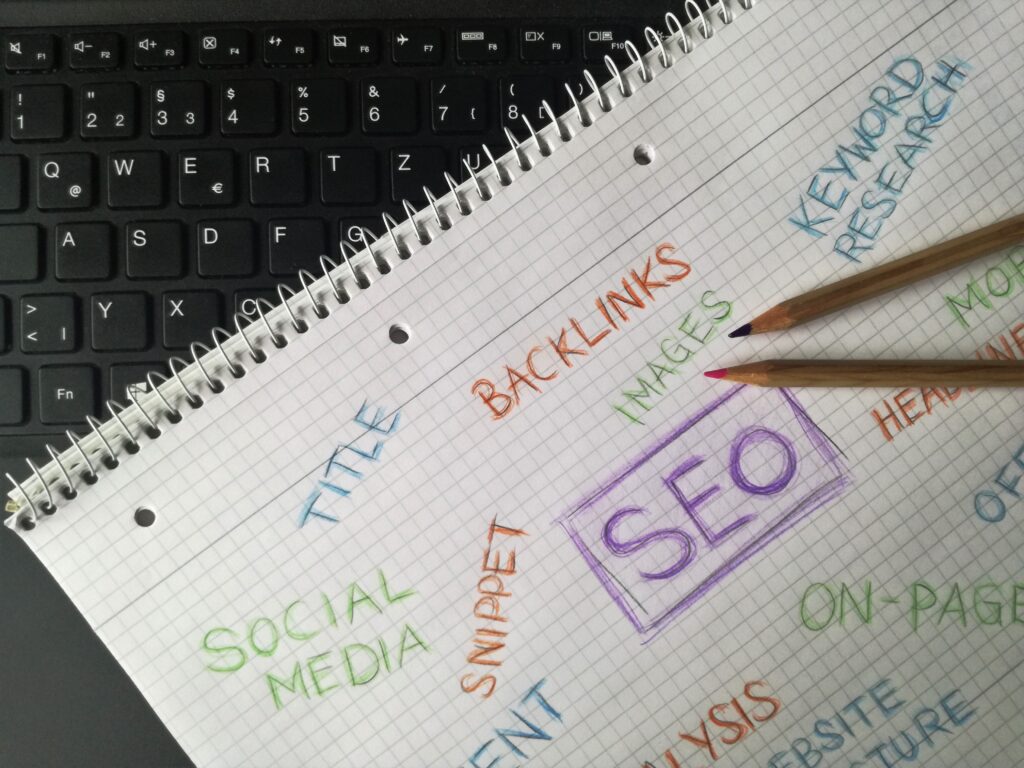
A friend once asked me:
“So, what exactly do you do when you do SEO?”
Fair question.
The problem is that explaining SEO properly can make you sound like you’re reading the ingredients on a shampoo bottle.
Keywords.
Backlinks.
Canonical URLs.
Schema.
Crawling.
Indexing.
Technical SEO.
Five minutes later, they’ve started checking their phone.
So here’s a simpler way to look at it.
SEO is basically making it easier for the right people to find you, understand what you offer, trust you, and choose you.
And just like running a real business, there isn’t one magic thing that makes it work.
A good restaurant needs more than a signboard.
A hardware shop needs more than shelves.
A salon needs more than a nice mirror.
And SEO needs more than keywords.
That’s where things get interesting.
SEO Is an Ecosystem, Not a Checklist
Look at SEO as a group of connected parts:
On-Page SEO
Technical SEO
Off-Page SEO
Local SEO
SEO Tools & Measurement
They’re different, but they work together.
Think about a nyama choma restaurant.
You can have the best nyama in town.
But if nobody knows where you are, that’s a problem.
If people know where you are but your opening hours are wrong, that’s another problem.
If everyone recommends you but your location is difficult to find, there’s another problem.
And if your sign says “Open” when you’ve been closed since 8pm…
Well, SEO can’t save you from that one.
The same principle applies online.
The biggest SEO gains often come from fixing the weakest part of the system.
1. On-Page SEO: Tell People What You’re Selling
Let’s say you own a furniture shop.
Someone searches:
“Affordable L-shaped sofas in Nairobi.”
If your product page simply says:
Beautiful Sofa
you haven’t given search engines — or customers — much to work with.
A better page might clearly explain:
L-Shaped Sofas in Nairobi – Affordable Modern Designs
Then explain:
- Available sizes
- Materials
- Colours
- Prices
- Delivery areas
- How to order
- Frequently asked questions
That’s the basic idea behind on-page SEO.
You are making your content clearer and more useful.
Some of the main pieces include:
Title tags
Your title should tell people what the page is about.
Meta descriptions
This is the little description that can appear below your result in search.
Think of it as your sales assistant getting about two sentences to convince someone to walk into the shop.
No pressure.
Headings
Use headings to organise information.
For a furniture shop, that could be:
H1: L-Shaped Sofas in Nairobi
H2: Available Sofa Designs
H2: Sofa Prices
H2: Delivery Information
H2: Frequently Asked Questions
Simple.
Keywords
Keywords are still useful, but SEO isn’t about squeezing the same phrase into every sentence until it sounds like a broken record.
If your salon offers braiding in Kitengela, talk naturally about the styles, prices, hair types, booking process and location.
You don’t need:
Braiding Kitengela. Best braiding Kitengela. Affordable braiding Kitengela. Braiding salon Kitengela…
That’s not optimization.
That’s a cry for help.
Image alt text
If you upload a photo of a kitchen cabinet, don’t call it:
IMG_928374.jpg
A useful description could be:
“Modern kitchen cabinets installed in Kitengela.”
When it accurately describes the image, it gives search engines more context and also helps people using screen readers.
Internal links
Your pages should also connect naturally.
A furniture business might link:
Sofa Sets → Coffee Tables → TV Stands → Bedroom Furniture
This makes it easier for people to explore and helps search engines understand how the information is connected.
2. Technical SEO: The Plumbing Nobody Notices Until It Breaks
Technical SEO is probably the least glamorous part of SEO.
Nobody wakes up excited about fixing a canonical URL.
But technical problems can quietly hold everything else back.
Think of a restaurant kitchen.
Customers don’t see most of the plumbing, wiring and drainage.
They just know whether the restaurant works.
Technical SEO is similar.
It deals with the underlying systems that help search engines crawl, understand and access your content.
Some important areas include:
Site speed
If something takes forever to load, people leave.
And no, telling them:
“Please be patient, we’re using high-quality images.”
probably won’t help.
Tools such as Google PageSpeed Insights and GTmetrix can help identify performance problems.
Mobile friendliness
A lot of local searches happen on phones.
Your pages need to work properly on smaller screens.
XML sitemaps
A sitemap helps search engines discover important pages.
Think of it as giving someone a map instead of saying:
“The shop is somewhere around that building.”
Robots.txt
This file gives search engine crawlers instructions about areas they should or shouldn’t access.
Get it wrong and you can accidentally tell search engines to stay away from something you actually wanted them to find.
Not ideal.
Canonical URLs
These help search engines understand the preferred version of a page when similar or duplicate URLs exist.
HTTPS and security
Security and proper technical configuration are basic foundations of a healthy online presence.
3. Off-Page SEO: What Other People Say About You
Now imagine two mechanics in the same neighbourhood.
Mechanic A says:
“I’m the best mechanic around.”
Mechanic B has customers saying:
“I’ve used this guy for five years.”
A boda boda rider recommends him.
A local transport company knows him.
A respected automotive publication mentions his workshop.
Which mechanic would you trust more?
That’s the basic idea behind off-page SEO.
It’s about what happens outside your own online property and the signals that help establish reputation and authority. Backlinks, relevant mentions and other external signals can all play a role.
Backlinks
A backlink is simply a link from another site to yours.
But don’t fall into the trap of:
“I need 500 backlinks.”
You don’t necessarily need 500 random websites linking to you.
You want relevant, trustworthy mentions.
A local food publication mentioning your restaurant is much more meaningful than a completely unrelated site from the other side of the internet.
Guest posting
You can contribute useful articles to relevant publications and communities.
The goal should be useful information first.
The backlink should be the bonus.
Digital PR
Getting your business mentioned in relevant publications, interviews, community stories or industry articles can help build visibility and credibility.
Social and community participation
If customers are discussing your industry on social platforms, forums or Q&A sites, being genuinely useful there can help people discover your brand.
The keyword is genuinely.
If every answer you give is:
“Check my business here…”
people will smell the marketing from three kilometres away.
4. Local SEO: Because Sometimes Your Customer Is Literally Around the Corner
Local SEO is particularly important for businesses that serve specific locations.
Imagine you own a barber shop in Kitengela.
Someone searches:
“barber near me”
They aren’t looking for the history of barbering.
They probably need a haircut.
Soon.
That’s where local search becomes powerful.
Google Business Profile
Your Google Business Profile should accurately communicate:
- What you do
- Where you are
- When you’re open
- How customers can contact you
- What your business looks like
- What customers think about you
And don’t forget reviews.
A profile with genuine, recent customer reviews gives potential customers much more confidence than one that looks abandoned.
Local directories
Depending on the market, businesses can also appear on relevant local and industry directories.
The important thing isn’t being listed everywhere.
It’s being listed in places that actually make sense for your business and customers.
NAP consistency
NAP means:
Name
Address
Phone number
If your business is called Mama Njeri Hardware on one platform, Mama Njeri Hardwares Ltd somewhere else and Njeri Building Materials somewhere else, you may be creating unnecessary confusion.
Keep important business information consistent.
Reviews
And please don’t treat reviews like decorations.
Respond to them.
A simple:
“Thank you for trusting us. We’re glad you were happy with the service.”
is better than collecting 100 reviews and replying to none.
5. SEO Tools: Your Digital Magnifying Glass
You can do SEO without spending a fortune on tools.
But tools make it much easier to find problems and opportunities.
Think of them as a mechanic’s diagnostic machine.
The machine doesn’t repair the car.
It tells you:
“Boss, this is where the problem is.”
You still have to fix it.
Google Search Console
This is one of the most useful places to start.
It can show things such as:
- What people searched for
- Which pages received clicks
- Impressions
- Search positions
- Indexing issues
- Sitemap information
PageSpeed Insights
Useful for investigating page performance and loading issues.
Screaming Frog
Useful for crawling a site and finding things such as:
- Broken links
- Missing titles
- Duplicate titles
- Missing descriptions
- Redirects
- Canonical issues
- Heading problems
And then we get to the bigger SEO platforms.
Where Semrush and SE Ranking Come In
Sometimes you need to zoom out.
You want to know:
What are my competitors ranking for?
Which keywords are bringing them traffic?
Who is linking to them?
Where am I losing visibility?
Which opportunities am I missing?
This is where platforms such as Semrush and SE Ranking become useful.
Try Semrush — Sem rush free trial
Semrush can help with keyword research, competitor analysis, backlinks, technical audits and broader SEO research.
But here’s my favourite way to use an SEO tool:
Don’t open it just to admire graphs.
Use the data to make decisions.
For example:
You discover that three competitors are appearing for a group of searches around a particular service.
You investigate.
You find that customers are asking very specific questions around that service.
Now you have an opportunity.
You can create useful content around those questions, improve the relevant pages, build internal connections between them and track what happens.
That’s much more useful than saying:
“Our SEO score increased from 72 to 78.”
Great.
But did anyone actually call?
That’s the number I care about.
SE Ranking Is Worth a Look Too
[Try SE Ranking — SE Ranking Free trial
SE Ranking brings together things like rank tracking, website audits, competitor research and backlink analysis.
For someone managing several projects or monitoring a competitive market, having these functions in one place can make SEO work considerably easier.
But I wouldn’t tell everyone to subscribe to every SEO platform.
You don’t need:
Semrush + SE Ranking + Ahrefs + Moz + Screaming Frog + 17 Chrome extensions
just to convince yourself you’re doing SEO.
Start with the tools that solve the problems you actually have.
Tools should support the strategy. They shouldn’t become the strategy.
And Then AI Changed the Question
For a long time, the SEO question was:
“How do I rank on Google?”
That’s still an important question.
But now people are asking AI assistants questions differently.
Instead of typing:
“Best restaurants in Nairobi”
someone might ask:
“Where should I take my family for a good Kenyan meal in Nairobi?”
Instead of:
“Best hiking places Kenya”
someone might ask:
“What are some good day hikes near Nairobi for beginners?”
Search is becoming more conversational.
And this is where terms like AEO and GEO come into the discussion.
SEO, AEO and GEO — Explained Without the Alphabet Soup
Let’s go back to our local restaurant.
Imagine you own a small nyama choma place.
SEO
Someone searches Google:
“Best nyama choma near me.”
Your business appears.
That’s SEO.
You got found.
AEO
Someone asks an answer engine:
“What should I look for when choosing a good nyama choma place?”
Your useful content could potentially help answer that question.
That’s where Answer Engine Optimization comes in.
You’re not just trying to rank.
You’re trying to provide a useful answer.
GEO
Now someone asks an AI assistant:
“Recommend some good nyama choma places in Nairobi.”
The AI generates an answer using information it can access and understand.
You want your business and its reputation to be clear enough across the web that systems can understand what you are, where you are and what you offer.
That’s the thinking behind Generative Engine Optimization.
The terminology is still evolving, and there’s plenty of overlap between SEO, AEO and GEO.
But the bigger change is easy to understand:
People aren’t only searching for links anymore.
They’re asking for answers.
Here’s the Part Many Businesses Miss
You don’t need to throw away everything you’ve learned about SEO because AI arrived.
Quite the opposite.
A lot of the fundamentals still matter.
Clear information.
Useful content.
Good technical foundations.
Relevant mentions.
Strong reputation.
Accurate business information.
Well-organised content.
Real expertise.
The difference is that you’re now trying to make your business understandable to both humans and machines.
The Weakest Link Usually Wins
Here’s a simple example.
Imagine a local bakery has:
Excellent products — 9/10
Great customer reviews — 9/10
Strong local reputation — 8/10
Useful content — 7/10
But its technical setup is a mess:
Technical SEO — 2/10
Improving the bakery’s content from 7 to 8 might help.
But fixing the technical problem could unlock much more.
Now imagine another business has perfect technical SEO but almost nobody talks about it.
Different problem.
Authority is the weak link.
Another business has strong authority but terrible product information.
Again:
Content is the weak link.
This is why blindly following an SEO checklist isn’t always the smartest approach.
You don’t need to do more SEO.
Sometimes you need to do the right SEO.
So Where Should You Start?
If you’re trying to improve your search visibility, ask these five questions:
1. Can search engines find and understand my content?
Look at technical SEO.
2. Does my content actually answer what people want?
Look at on-page SEO and search intent.
3. Does anyone trustworthy recognise or recommend my business?
Look at off-page SEO and authority.
4. Can people easily find me locally?
Look at Google Business Profile, reviews and local visibility.
5. Am I measuring what is happening?
Look at Search Console, analytics and SEO tools.
Then ask one more question:
Which one is weakest?
Start there.
Not with the trendiest SEO tactic on LinkedIn.
Not with the latest acronym.
Not because someone posted a screenshot showing their traffic went up 900%.
Start with the bottleneck.
SEO in 2026 Is Less About Tricks and More About Being Useful
I think this is where SEO is heading.
Not:
“How many times can I put this keyword on the page?”
But:
“Can I genuinely answer what this person wants?”
Not:
“How many backlinks can I buy?”
But:
“Why would another credible business or publication want to mention me?”
Not:
“How do I trick an algorithm?”
But:
“How do I make my business easier to understand and trust?”
And increasingly:
“If someone asks an AI about my industry, would there be enough useful information about my business for it to understand what I do?”
That’s a much healthier way to approach SEO.
The Simple Version
If I had to explain the whole thing to that nine-year-old again, I’d probably say:
SEO is like opening a shop on a busy street.
On-page SEO makes your shelves and labels easy to understand.
Technical SEO makes sure the doors, lights and plumbing actually work.
Off-page SEO is other people telling their friends your shop is worth visiting.
Local SEO makes sure people nearby can find your exact location.
SEO tools are the person walking around with a clipboard saying:
“This is working. This isn’t. And here’s where your competitor is beating you.”
AEO is about giving good answers.
GEO is about being understood when people ask AI for recommendations and information.
And the whole thing works best when the parts work together.
That’s SEO.
Not one trick.
Not one keyword.
Not one tool.
A system.
And when that system isn’t working, don’t immediately add another 20 tasks to your list.
Find the weakest part. Fix that first.
Because sometimes the biggest SEO win isn’t doing more.
It’s finally fixing the thing you’ve been ignoring.